


















Narrow Leaf Milkweed - Native
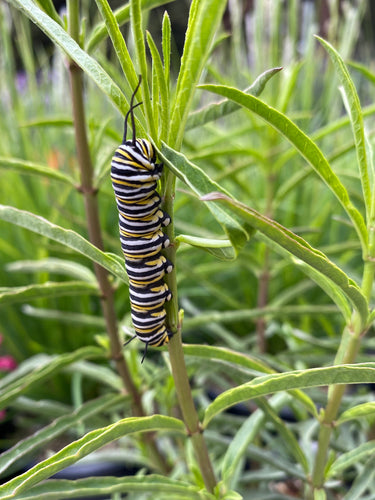
This variety produces attractive clusters of lavender and white, starry flowers from early summer until fall, above thin stems supporting long, narrow leaves in whorls; a source of nectar for bees and butterflies; seed pods are great in dried arrangements.
 Mature Height: 3 feet
 Mature Width: 1 foot
 Light: Full Sun, Partial Shade
 Narrow Leaf Milkweed - Native
$7.99
/
Narrow Leaf Milkweed - Native
$7.99
/

Check availability at your local Armstrong Garden Center
Details
Narrowleaf Milkweed features showy fragrant white flat-top flowers with lavender overtones at the ends of the stems from early summer to early fall. The flowers are excellent for cutting. Its narrow leaves remain dark green in color throughout the season. The fruits are showy tan pods displayed from late summer to mid fall.
Landscape Attributes
Narrowleaf Milkweed is an herbaceous perennial with an upright spreading habit of growth. Its medium texture blends into the garden, but can always be balanced by a couple of finer or coarser plants for an effective composition.
This is a relatively low maintenance plant, and is best cleaned up in early spring before it resumes active growth for the season. It is a good choice for attracting bees and butterflies to your yard, but is not particularly attractive to deer who tend to leave it alone in favor of tastier treats. Gardeners should be aware of the following characteristic(s) that may warrant special consideration;
- Spreading
- Self-Seeding
Narrowleaf Milkweed is recommended for the following landscape applications;
- Mass Planting
- General Garden Use
- Naturalizing And Woodland Gardens
Care
Narrowleaf Milkweed will grow to be about 3 feet tall at maturity, with a spread of 12 inches. It tends to be leggy, with a typical clearance of 1 foot from the ground, and should be underplanted with lower-growing perennials. It grows at a medium rate, and under ideal conditions can be expected to live for approximately 10 years. As an herbaceous perennial, this plant will usually die back to the crown each winter, and will regrow from the base each spring. Be careful not to disturb the crown in late winter when it may not be readily seen!
This plant does best in full sun to partial shade. It is very adaptable to both dry and moist growing conditions, but will not tolerate any standing water. It is considered to be drought-tolerant, and thus makes an ideal choice for a low-water garden or xeriscape application. This plant does not require much in the way of fertilizing once established. It is not particular as to soil pH, but grows best in poor soils. It is somewhat tolerant of urban pollution. This species is native to parts of North America, and parts of it are known to be toxic to humans and animals, so care should be exercised in planting it around children and pets. It can be propagated by division.
| Attracts | |
|---|---|
| Botanical Name | |
| Deer Resistant | |
| Evergreen or Deciduous | |
| Family Name | |
| Flower Color | |
| Bloom Time | |
| Foliage Color | |
| Genus Name | |
| Growth Rate | |
| Hardiness Zone | |
| Landscape Uses | |
| Light Needs | |
| Mature Height | |
| Mature Width | |
| Prune Time | |
| Water Needs | |
| Waterwise |